1445 stories
·
0 followers

Confusion swirls on source of diarrhea outbreak, but it’s still Taylor Farms

1 Share

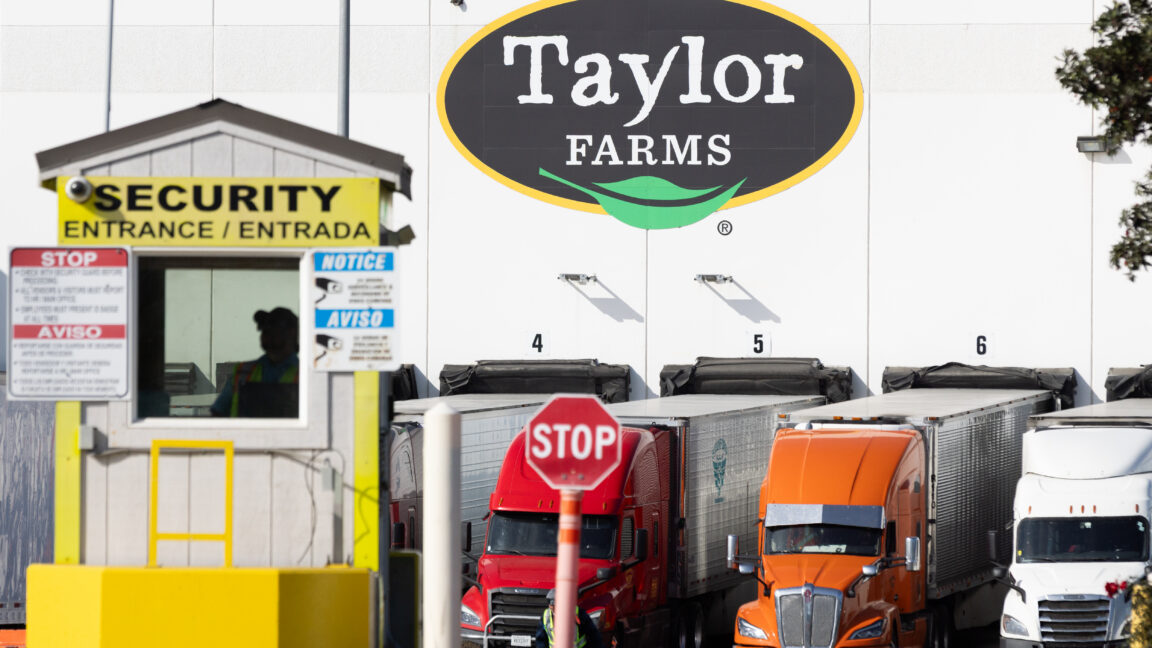
Federal officials on Monday reaffirmed that iceberg lettuce from Taylor Farms still appears to be the source of Cyclospora, the microscopic parasite behind a multi-state surge in explosive diarrhea cases.

The assertion was intended to clear up confusion that began swirling over the weekend around a false positive test from the Food and Drug Administration—which Taylor Farms celebrated, sparking confusion. Still, many details of the outbreak remain murky, largely due to the vague recall information Taylor Farms has publicly provided.

On Friday, the FDA, along with the Centers for Disease Control and Prevention, announced that the FDA's traceback investigations for the outbreak converged on Taylor Farms. Traceback investigations work by tracking backward from sick people and the foods they ate to where those foods came from through the supply chain, down to individual farms or production facilities. When the FDA said their investigation converged on Taylor Farms, the agency means that, over and over again, tracebacks led them to shredded iceberg lettuce grown in Central Mexico and supplied by Taylor Farms—which also goes by Taylor Fresh Foods.

The convergence of tracebacks was the basis for the FDA and CDC publicly identifying Taylor Farms on Friday. It was also the basis for Taylor Farms issuing a sweeping recall the same day for all its iceberg lettuce sourced from Central Mexico between June 29 and July 16.

At the time, the FDA's traceback investigation specifically focused on tracing back shredded iceberg lettuce that people had eaten from Taco Bell locations. Thus, the messaging at the time suggested that the contaminated lettuce may be limited to Taco Bell. A CDC press release Friday warned consumers not to eat lettuce at Taco Bell locations in five states (Indiana, Kentucky, Michigan, Ohio, and West Virginia). It noted that "Shredded iceberg lettuce sold in grocery stores or served in other restaurants is not affected."

Mixed messages

Then things changed over the weekend. First, on Saturday, the FDA announced that a sample of Taylor Farms lettuce tested positive for Cyclospora. The result confirmed the traceback investigation findings—and also potentially extended the list of contaminated products. But, then on Sunday, the FDA deleted the information from its website, explaining that on further review, the result was a false positive.

In a press briefing Monday, FDA officials explained that the test result was from lettuce sampled at the border that was not included in Taylor Farms' recall. Given that new illnesses are still being reported and the tested lettuce was not part of the outbreak recall, the FDA rushed to publicly disclose the information in hopes of preventing more illnesses, the officials said. But, upon further testing, it became clear that the genetic test for the parasite had returned a false result. Officials would not go into detail on what caused the faulty result, but contamination is a common source of false positives.

Meanwhile Taylor Farms seemed to celebrate the rescinded test result over the weekend, sparking confusion.

"Today, FDA apologized to us," Taylor Farms wrote at the start of a statement Sunday.

"Today, we were informed that FDA made a mistake, and this was a false positive. To be clear, at this moment, FDA has not identified a single positive product test result for Cyclospora," the statement read (emphasis theirs).

This response was followed by headlines that suggested the FDA may have blamed Taylor Farms in error. The Wall Street Journal, for instance, reported the FDA "walked back" an earlier detection, to which the FDA directly responded.

"To clarify, this false-positive lab sample DOES NOT change the basis for FDA’s ongoing outbreak investigation or the overwhelming epidemiological data supporting the current voluntary recall by Taylor Farms," the agency said on social media.

In the press briefing Monday, FDA officials also flatly denied issuing an apology to Taylor Farms. They further explained that the false result didn't change anything about the situation, and outbreaks involving short-lived produce often lack confirmatory positive tests.

"I also want to be clear that our weekend communications around a false positive test result do not change the basis for FDA's ongoing outbreak investigation or the epidemiological data supporting the current voluntary recall by Taylor Farms," Acting FDA Commissioner Kyle Diamantas emphasized at the outset of the briefing.

Vague recall

Although the testing turned out to be false, additional information over the weekend did seem to expand the scope of the outbreak—at least the publicly visible part of it. The New York Times reported that restaurants and retailers other than Taco Bell were removing iceberg lettuce they received from Taylor Farms. In many cases, the lettuce was sold in large bags for restaurants or service operations, and sometimes blended with romaine.

Walmart removed lettuces sold under its Marketside brand—which were included in the FDA's notices but not in Taylor Farms' recall list. Sysco, the nation’s largest food distributor, told the Times that it was removing lettuce products it had from Taylor Farms. So did US Foods, another large food distributor. Jack in the Box restaurants also said they were affected by the recall.

The Times noted that Taylor Farms' recall notice is vague—it doesn't list these distributors or retailers affected, only product codes and dates. The FDA said on its website Saturday morning that Taylor Farms "has not publicly provided distribution information or a list of customers who received the product that was voluntarily removed from the market." The FDA later removed that statement, but the recall list remains vague.

Overall, Taylor Farms said it distributed the potentially contaminated lettuce to 27 states. But it's unclear if food distributors delivered the food to additional states. For instance, New York and California have reported cyclosporiasis cases, but are not included in the recall list.

According to the CDC data, at least 34 states have reported cases. The true number of cases is in the thousands, clearly exceeding the country's standard range of between 2,000 and 5,000 in recent years. In Michigan alone, health officials are reporting 6,571 cases and 102 hospitalizations as of July 21.

Traceability

Frustrating the situation is that the FDA does not currently require food producers to provide information on all its customers. A new FDA rule, the Food Traceability Rule, was lined up to bolster traceability record requirements for producers of various foods, including leafy greens. The rule would "allow for faster identification and rapid removal of potentially contaminated food from the market, resulting in fewer foodborne illnesses and/or deaths."

It was set to take effect January 20, 2026, but last year the Trump administration pushed back the compliance deadline by 30 months, to July 20, 2028.

With Taylor Farms now in the spotlight, online scrutiny had raised speculation the company may have played a role in the delay. The Trump administration's decision to delay the rule was announced on March 20, 2025. Matthew Cortland, a lawyer focusing on health and disability policy at the think tank Data for Progress, noticed that on March 26, 2025—just five days after the decision—Taylor Fresh Foods (aka Taylor Farms) donated $1 million to the Trump-backing super PAC MAGA, Inc (PDF, page 42).

Taylor Farms did not immediately respond to a request for comment.

In a response posted on social media, an account for the Department of Health and Human Services called the speculation "FAKE NEWS," and claimed nothing influences decisions of the administration "except science and the safety of the American people."
Read full article

Comments


Read the whole story
Share this story
Delete

Judge Approves $1.5 Billion Anthropic Settlement Over Pirated Books Used To Train Claude

1 Share
A federal judge has approved Anthropic's $1.5 billion copyright settlement over pirated books used to train its Claude chatbot, with authors and publishers set to receive about $3,000 per book. The case produced a mixed ruling for the AI industry: training on copyrighted books was found not to be illegal, but Anthropic's use of pirated copies from shadow libraries was. The Associated Press reports: District Judge Araceli Martinez-Olguin said in a Monday ruling that the class-action settlement provides "meaningful relief" to affected authors and publishers. About 91% of the more than 482,000 books covered by the ruling have been claimed by authors or publishers who are now due payment. Plaintiff attorney Justin Nelson said in a statement that the settlement was "the largest known copyright recovery in history. We look forward to making distributions to the Class as promptly as possible."

Read more of this story at Slashdot.

Read the whole story
Share this story
Delete

AI Companies Are Buying Tons of Old Books Because They're Free of AI Slop

1 Share
An anonymous reader quotes a report from 404 Media: As AI companies search for more training data to improve their models, one company is offering old, printed books as an ideal source because they are guaranteed to be free of the very AI slop AI companies are producing. "The world's best AI training data is sitting on a shelf," ISBNdb, a company that produces what it claims is "the world's largest book database," and that offers high-volume book acquisition services for AI companies, says on its site. "Books represent curated, peer-reviewed, domain-specific human knowledge, structured in a way no web crawl can replicate. Dense, edited, authoritative." In one article on its site, ISBNdb explains that printed books published before 2022 are ideal for AI training data because they don't include AI generated text. As the article correctly notes, much of the data that AI companies can scrape from the internet today is likely to include AI generated text, which could result in "model collapse," a process by which AI models that are trained on AI generated data results in worse models that are more prone to errors. The article also notes that book authors who object to their writing being scraped for training purposes can now easily poison AI models by producing writing designed to manipulate and sabotage the resulting AI models. "Print books from the pre-LLM era are structurally guaranteed to be free of this contamination. That alone is a significant advantage [...] "Physical books published before this date [pre-2022] are structurally clean of modern poisoning tools." [...] ISBNdb advertises that it can keep the identity of AI companies secret. "Strict NDA [non-disclosure agreement] on every engagement," ISBNdb's site says. "Every project begins with a legally binding non-disclosure agreement. Your identity, strategy, and acquisition targets are never disclosed." ISBNdb notes that AI companies may not want to be caught destroying printed books during the scanning process. "The optics problem is real," ISBNdb's site says. "'AI company destroys two million books' is not a headline that generates sympathy."

Read more of this story at Slashdot.

Read the whole story
Share this story
Delete

LG to Ban Residential Proxies from Smart TV Apps

1 Share

The home appliance giant LG Electronics USA said this week it plans to suspend any apps built for its smart TVs that turn one’s television into an always-on residential proxy node. The move comes less than a month after researchers found that more than 42 percent of games and other apps available for download on LG’s webOS store allow unknown third-parties to route their Internet traffic through a user’s TV.

Proxy SDK prevalence among smart TV apps for LG (webOS) and Samsung (Tizen OS) televisions. Image: Spur.us.

On July 2, we featured research by the security firm Spur that examined the prevalence of residential proxy software development kits (SDKs) in smart TV apps. Spur found more than 42 percent of apps available for download on LG smart TVs include SDKs that turn one’s television in a proxy node indefinitely, and that more than a quarter of the apps made for Samsung’s Tizen operating system had similar residential proxy components.

Responding to questions about Spur’s research, LG Senior Vice President John Taylor told KrebsOnSecurity the company was working with app developers to remove the residential proxy option from their apps on the webOS platform. Developers that fail to comply, he said, will find their apps suspended.

“A residential proxy network is not an intended use for LG smart TVs, and LG Electronics is working with developers to remove the residential proxy option from their apps on the webOS platform,” Taylor said. “If this option is not removed, these apps will be suspended.”

Taylor said LG is committed to keeping residential proxy networks out of its smart TV apps going forward, and that the company’s review of those apps is “well underway now.”

“As part of our ongoing efforts to enhance platform quality and the user experience, LG will continue to strengthen our evaluation process for developer-submitted apps, including those that incorporate residential proxy SDKs,” Taylor wrote in an emailed statement.

App makers looking for ways to monetize their creations can turn to residential proxy providers, which pay developers to include SDKs that turn the user’s device into a residential proxy node that is rented to paying customers. In the case of LG and Samsung smart TVs, Spur found residential proxy SDKs bundled with everything from simple games like Pac-Man to screensavers and file utilities.

A Pac-Man smart TV app from Bright Data offers users the choice between viewing ads in the game or agreeing to allow their TV to serve as a residential proxy node. Image: Spur.us.

Spur’s report found the residential proxy network Bright Data accounted for a majority of proxy SDKs across both Samsung and LG smart TVs. Bright Data did not respond to requests for comment.

Bright Data and other proxy providers named in Spur’s report all say they follow rigorous know-your-customer processes to validate legitimate uses of their services, which is often heavily tied to content-scraping activities by said customers. The proxy companies also say they incorporate technological countermeasures to prevent proxy service customers from being able to interact with and control other devices on the proxy user’s local network.

Spur argues the problem is not that residential proxy networks exist, but rather that they are being embedded at scale in devices that most consumers do not think of as computers and are not equipped to audit.

“A one-time consent prompt buried in a TV app is not a substitute for meaningful transparency, ongoing control, and platform oversight,” Spur’s Trevor Sutter wrote. “The risk is amplified when consent comes from individuals within the household who use the device but shouldn’t give consent, such as minors.”

LG’s announcement that it is culling residential proxy SDKs from its app store is welcome news, but the company recently came under fire for another questionable partnership: Pimping McAfee security products via software drivers included in its high-end LCD monitors.

Earlier this week, the Youtube channel Gamers Nexus showed that certain LG LCD monitors will automatically install an app that promotes paid McAfee antivirus subscriptions, and that the app arrives through Windows Update without an approval prompt.

Read the whole story
Share this story
Delete

Hackers Are Exploiting Recently Patched WordPress Bugs, Putting Millions of Websites at Risk

1 Share
An anonymous reader quotes a report from TechCrunch: Hackers are breaking into websites that run vulnerable versions of the popular blogging software WordPress, according to several cybersecurity firms. One estimate puts the number of vulnerable WordPress websites at tens of millions as of Monday. Last week, WordPress patched two critical security flaws, urging people who run its software on their websites to update it "immediately." The vulnerabilities are so severe that WordPress enabled forced updates where possible. Since then, cybersecurity companies Patchstack, Hexastrike, and WatchTowr have all warned that hackers are exploiting the vulnerabilities in the wild, meaning they are taking over websites that are still running susceptible versions of WordPress. It's unclear how many WordPress-powered websites on the internet are at risk, but it's possible to make some educated guesses. The vulnerable versions of WordPress are 6.9.0 through 6.9.4, and 7.0.0 to 7.0.1. According to WordPress' official stats, there are more than 400 million websites that run those flawed versions, although these statistics likely don't reflect websites that have recently been patched. Cybersecurity consultant Daniel Card, who told TechCrunch that he looked at a sample of around 3,500 WordPress websites, estimates that less than 15% are vulnerable. Applying Card's projection across the total population of WordPress websites on the internet, the total figure would still be around 90 million. [...] One of the critical WordPress bugs was found and reported by Adam Kues of cybersecurity firm Searchlight Cyber, which dubbed it WP2Shell. Paired with the other bug, hackers can take full remote control of vulnerable websites.

Read more of this story at Slashdot.

Read the whole story
Share this story
Delete

The first UL 3700-compliant plug-in solar microinverter is now available in the US

1 Share
It's a step toward making alternative energy accessible on a smaller, renter-friendly scale.

Read the whole story
Share this story
Delete
Next Page of Stories